

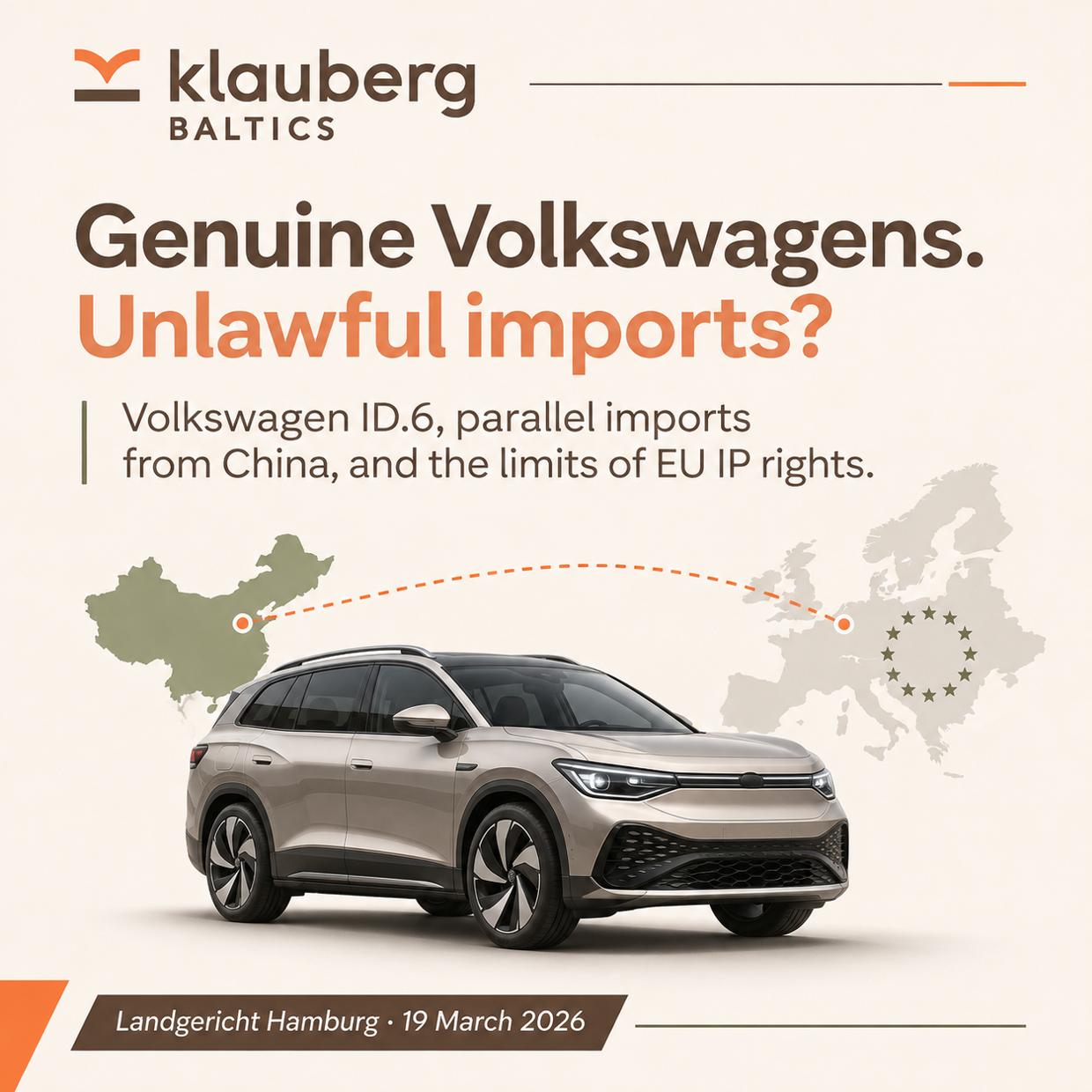
GENUINE VOLKSWAGENS, UNLAWFUL IMPORTS? A GERMAN COURT RULES ON PARALLEL TRADE
Can a car manufacturer prevent the sale of its own genuine vehicles in the European Union?
On 19 March 2026, the Hamburg Regional Court delivered a significant judgment in a dispute concerning 22 Volkswagen ID.6 CROZZ electric vehicles imported from China into Germany.
The vehicles were genuine Volkswagens, manufactured for the Chinese market. However, Volkswagen challenged their resale in Germany, relying on its trademark and registered design rights.
The Court largely sided with Volkswagen.
The central legal issue was the principle of exhaustion of intellectual property rights.
Under EU law, trademark and design rights are generally exhausted once goods have been placed on the European Economic Area (EEA) market by the rights holder or with its consent.
However, goods first marketed outside the EEA do not automatically benefit from this protection.
In this case, the dealers could not establish that Volkswagen had consented to the vehicles being placed on the EEA market. Consequently, the Court found an infringement of Volkswagen’s trademark and design rights.
Notably, the Court also recognised Volkswagen’s claim for the vehicles to be surrendered for destruction, finding that removing the protected branding was not a practicable alternative.
The judgment, which was not yet final when announced, raises broader questions about the relationship between intellectual property protection, parallel imports and market access.
The key takeaway? A product’s authenticity does not necessarily mean that its importation and commercial resale within the EU are lawful.